

Germany’s Deutschlandticket has achieved something public transport has been working towards for years: it has reduced complexity. One ticket instead of a maze of fares. One price instead of regional differences.
Millions of people now use the offer regularly. That is a success story for public transport – and at the same time only the beginning.
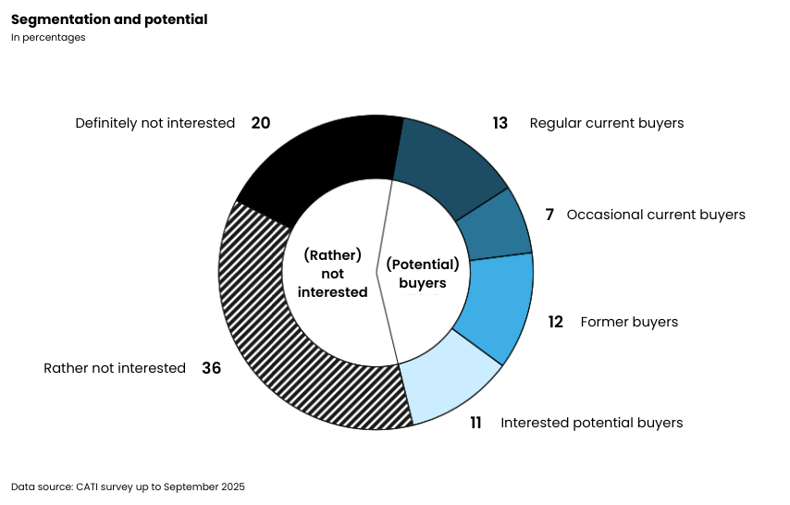
Because despite its high level of awareness, a huge share of the potential remains untapped. According to the latest Deutschlandticket evaluation from February 2026, around 56% of people are currently not actively interested in the offer.
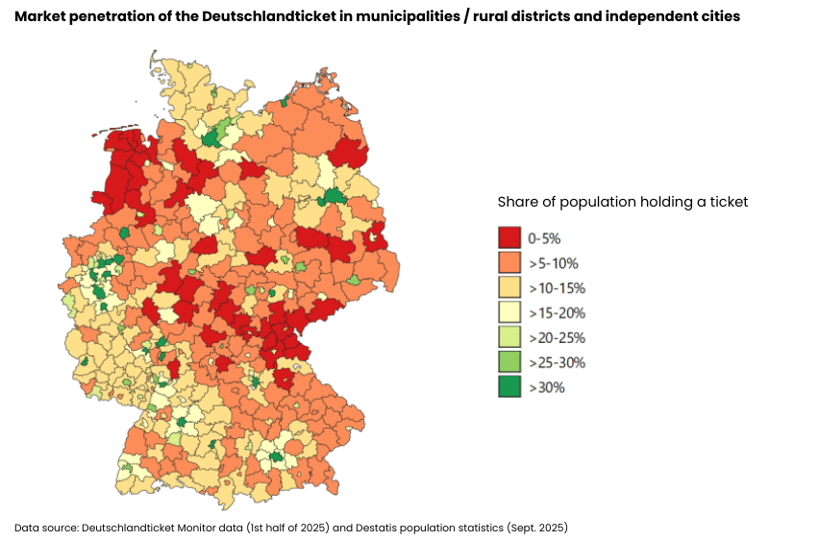
And in most regions across Germany, market penetration still remains below 20% and in some areas even below 5%.
 The key question is therefore, how to make public transport more attractive for people who currently only travel occasionally. That is where the next growth opportunity for public transport will be decided. After all, only those who travel occasionally might be interested in a future Deutschlandticket.
The real problem is not just the service itself
In the public transport sector in Germany, discussions often focus on infrastructure, service levels and funding. These are, of course, critical topics. But in everyday life, public transport usage often fails because of something far more fundamental: access.
Many people do not use buses and trains infrequently because the service is missing, but because getting started feels complicated. For many, the uncertainty begins with simple questions:
- Which ticket do I need?
- Is a subscription even worth it?
- Which travel zone applies?
- And what happens if my routine changes again next week?
Occasional travellers in particular do not want to study mobility before they can use it. They simply want to travel. The main reason that people choose to travel by car is not speed or comfort. Often, it wins because it removes the need to make decisions.
Today, competition is no longer defined only by the offering, but by user experience.
Mobility has changed – fare models often haven’t
Traditional public transport logic is built around a reality that is no longer standard for many people: daily commuting, fixed routines and long-term subscriptions. But mobility has become far more flexible.
Remote working, hybrid schedules and the need for spontaneous travel now shape everyday life for millions of people. Not everyone travels the same route five days a week and not everyone wants to commit long term. Yet people still expect mobility to be simple and available whenever they need it.
This is exactly where today’s fare systems reveal a gap – between the single ticket and the flat-rate subscription. And that is precisely where the greatest growth potential lies.
Occasional travellers are often overlooked
Public debate tends to focus on regular passengers. But strategically, the most interesting group is made up of people who currently use public transport only occasionally.
Because they represent a significant share of untapped demand.
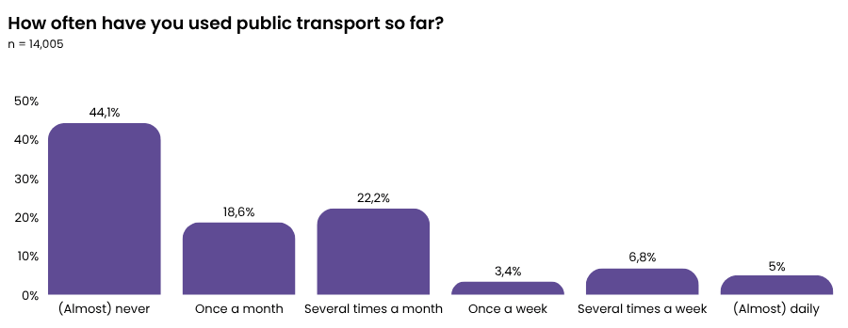 Survey results from new FAIRTIQ users in Germany paint a clear picture: 44.1% of FAIRTIQ users had previously used public transport rarely or not at all. Another 18.6% used it only once per month. At the same time, many still own a car.
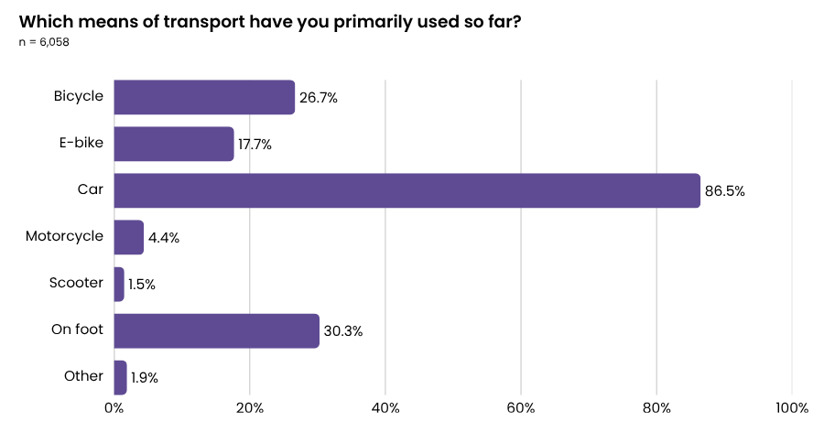 For transport operators and authorities, this is a crucial insight.
These users are not simply switching from one existing sales channel to another. They represent additional demand – people who were often not reached before.
Why mobile pay-as-you-go fits modern travel needs
Not everyone needs a subscription. But everyone needs simple access to public transport.
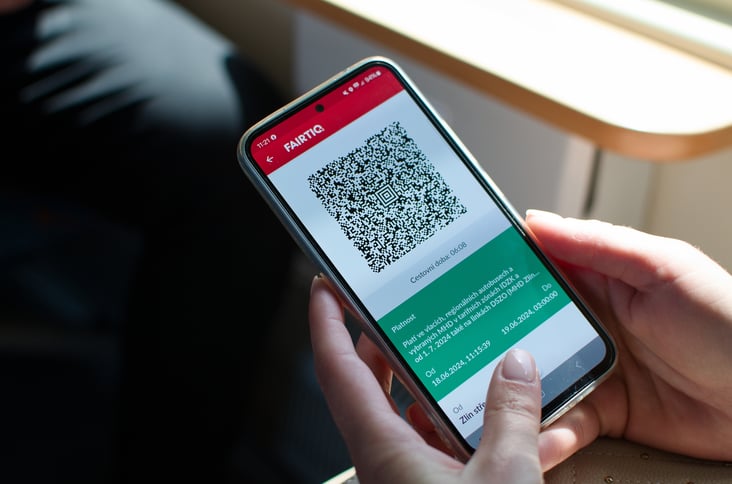
That is why flexible models are becoming increasingly important. Mobile pay-as-you-go enables spontaneous travel without fare knowledge, without advance decisions and without long-term commitments. People simply start their journey and the system automatically calculates the right fare.
This fundamentally changes how public transport is perceived. Because once ticketing disappears into the background, mobility becomes simpler, more spontaneous and more accessible.
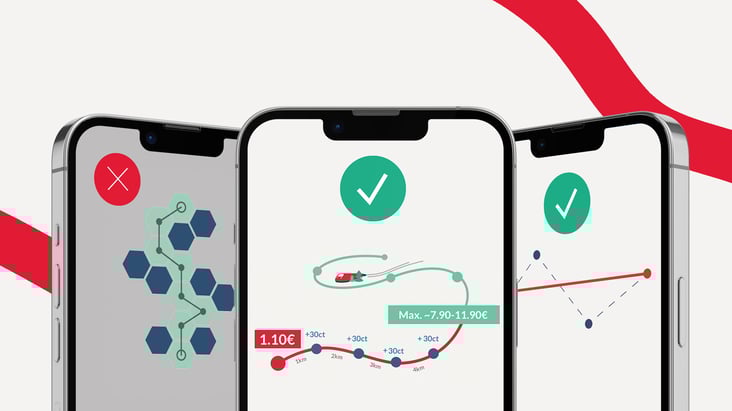
This approach becomes even more powerful when combined with fare capping. After all, why should passengers have to choose between a single ticket and a subscription if the system can automatically calculate the best price?
That is exactly where modern ticketing models show their strength: they combine flexibility for passengers with transparency and predictability for transport operators.
eezy.nrw shows how complementary models can work together
Discussions around digital ticketing models are often framed as an either-or debate. But in reality, different models serve different passenger needs. The eezy.nrw fare model in North Rhine-Westphalia, Germany, is a strong example of this. The solution complements existing offers and ensures that, thanks to fare capping, passengers no longer have to choose between a single ticket and a subscription.
And that is exactly what is needed to bridge the gap between regular and occasional travellers.
The goal should not be to replace existing subscriptions, but to reach people for whom traditional models simply no longer fit everyday life.
The Deutschlandticket has made regional public transport in Germany simpler for frequent travellers. Mobile pay-as-you-go can help make it more accessible for everyone else – and unlock entirely new passenger groups.
Simplicity as a growth lever
Public transport today holds enormous potential. Not only in major cities, but everywhere people would actually be willing to use buses and trains more often, if access felt simpler.
Innovative fare models and mobile pay-as-you-go complement each other perfectly. While flexible fares better reflect different mobility needs, mobile pay-as-you-go makes public transport exceptionally easy to use. Together, they lower the barrier to entry and make public transport more attractive, especially for occasional travellers.
Because mobility no longer competes only in price or service levels. It competes in simplicity and user experience.

.png?width=732&name=image%20(2).png)


Share