Last updated: September 2026
When Rejsekort & Rejseplan A/S (RKRP) set out to replace Denmark's national ticketing system, it did not begin with a card, an app or a payment technology. It began with the experience that different travellers needed, and exploring the combination of channels required to serve them all.
The strategy made travellers’ smartphones the primary way to access public transport through Mobile Pay-As-You-Go (MPAYG), complemented by a purpose-built card for those who could not or preferred not to use a smartphone. Both channels operate within the same national Pay-As-You-Go (PAYG) ecosystem.
Within two years, this so-called “mobile-first strategy” had transformed both the customer experience and the economics of Automated Fare Collection (AFC).
Denmark’s lesson is broader than putting smartphones first. RKRP did not treat the app, the physical card and the customer portal as separate technology projects. It began with the experience required across traveller groups and use cases, gave each channel a distinct role, and placed them on one shared platform.
For transport authorities, Denmark demonstrates that mobile-first is not simply a digital strategy - it is a fundamentally different operating model. By making the smartphone the primary way to access public transport and introducing a complementary card-solution only where needed, RKRP has reduced infrastructure requirements, simplified operations, strengthened customer relationships and created a more cost-efficient, future-ready ticketing ecosystem without compromising accessibility.
This comprehensive channel strategy improves the experience while avoiding the gaps, duplicated systems and unnecessary infrastructure that can result when channels are designed in isolation.
This case study examines the strategic decisions behind that transformation - from defining a mobile-first vision to deploying the world's first nationwide Pay-As-You-Go ecosystem, powered by FAIRTIQ. It explores how a Mobile Pay-As-You-Go app and card-based Tap-solution work together on a single backend to serve an entire country's public transport network, and what transport authorities can learn when designing the next generation of fare collection.
Starting with the customer, not the payment technology
Back in 2023, Rejsekort & Rejseplan A/S faced a challenge familiar to transport authorities across the globe. Denmark's nationwide card-based AFC system was approaching the end of its life and replacing it would require another major investment in physical infrastructure. The obvious solution would have been to deploy a new generation of validators across the country.
Instead, Rejsekort asked a more fundamental question: What experience should every traveller be able to have, and which combination of channels could provide it most effectively and sustainably?
Three strategic considerations shaped the answer.
Digital experiences had become the norm across banking, payments, insurance and retail. Meanwhile, customer satisfaction with the existing Rejsekort card had plateaued at around 65%. Travellers increasingly expected ticketing to be just as effortless as the other digital services they used every day.
Replacing the existing validator network with another nationwide card system would require substantial investment - not only upfront, but throughout the lifetime of the system. Rejsekort wanted a sustainable solution that could grow without continuously growing infrastructure costs.
The new ticketing system needed to be more than a replacement for its predecessor. It had to provide the technological foundation for future mobility services - including potential expansion into demand-responsive transport (DRT) - while enabling continuous innovation, improving the passenger experience, and creating more direct customer touchpoints.
Rather than replacing the existing system with a new validator-based system, RKRP designed the channels as a portfolio. Mobile Pay-As-You-Go would provide the richest experience and become the primary channel. A simpler physical Pay-As-You-Go card would address the needs mobile could not. One platform would process journeys, fares and operational rules across both.
This mobile-first strategy designed around the passenger also addressed three wider objectives: increasing satisfaction, reducing lifecycle infrastructure costs and creating a system that could evolve through software rather than repeated hardware replacement.
Putting Mobile Pay-As-You-Go first was the outcome of RKRP’s channel strategy, not its starting assumption. It meant placing the most capable and infrastructure-light channel first, while designing a complementary channel around the needs it could not meet.
It meant designing the future system around the channel that would serve the overwhelming majority of travellers most effectively, while ensuring everyone could still access public transport.
Both channels run on the same FAIRTIQ backend for a comprehensive and efficient PAYG ticketing ecosystem.
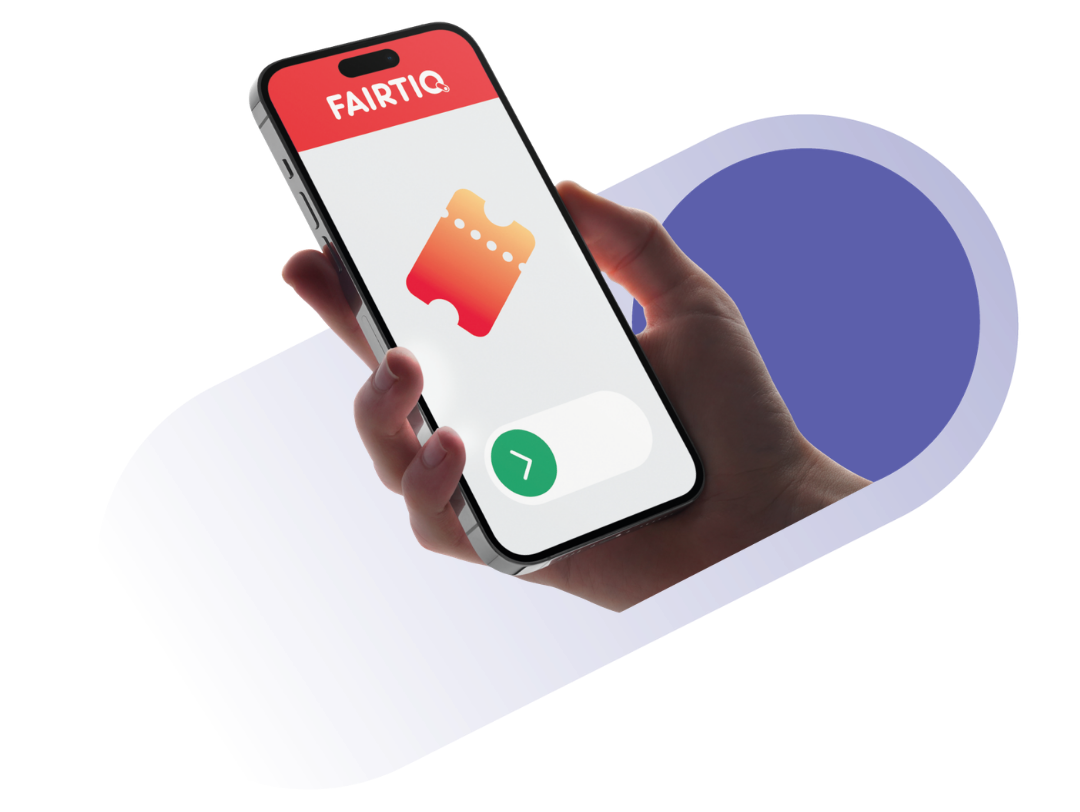
The first step towards that mobile-first vision was the nationwide launch of the FAIRTIQ-powered Rejsekort app in September 2024.
Within just 20 months of its public launch, the app became Denmark's primary ticketing channel. By June 2026, about 90% of all Rejsekort transactions across rail, bus, tram and metro were already taking place through the app, demonstrating that when designed around traveller needs, a well-designed mobile channel can become the preferred way to travel at national scale.
For travellers, the app removes much of the friction traditionally associated with ticketing. There is no need to purchase tickets in advance, understand complex fare structures or carry a dedicated travel card. Travellers simply start their journey with one swipe, while the system automatically calculates the correct fare. The result has been a significant improvement in customer satisfaction. User satisfaction with the new mobile experience exceeds 90%, compared to approximately 65% for the previous card-based system.
For Rejsekort and the participating transport operators, every traveller who chooses the app strengthens the mobile-first strategy. Mobile journeys require less physical infrastructure, enable faster innovation through seamless software updates, and establish a direct digital relationship with customers. New products, service messages and customer communications can be delivered instantly without replacing hardware or issuing new cards.
Read Part 1 of this case study to discover how Rejsekort & Rejseplan A/S and FAIRTIQ launched a nationwide Mobile Pay-As-You-Go solution in just six months.
The nationwide success of the Rejsekort app proved that MPAYG can become the preferred way to access public transport at a national scale and thus validated the first part of Denmark's mobile-first strategy. However, mobile-first was never intended to mean mobile-only.
From the beginning, RKRP recognised that a small but important group of travellers would continue to need - or simply prefer - a physical travel medium. This includes travellers with specific accessibility payment or technology needs such as:
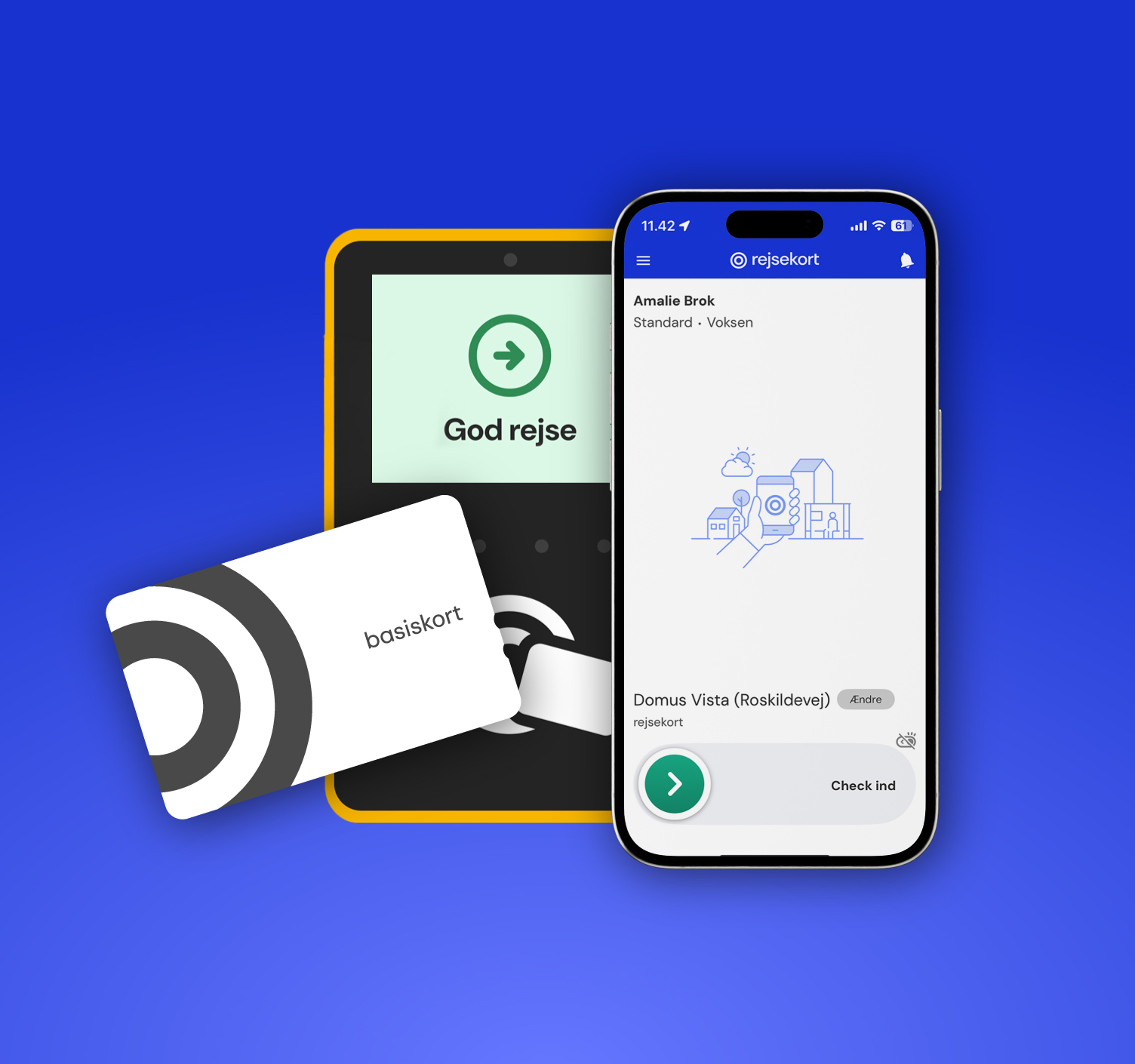
Basiskort is deliberately designed as a lightweight complement to the Rejsekort app. While the app remains the primary channel for the vast majority of travellers, Basiskort ensures that public transport remains accessible and inclusive for everyone.
Together, they provide access to the same nationwide Pay-As-You-Go system, combining the efficiency of a mobile-first approach with the inclusivity required of a national public transport network.
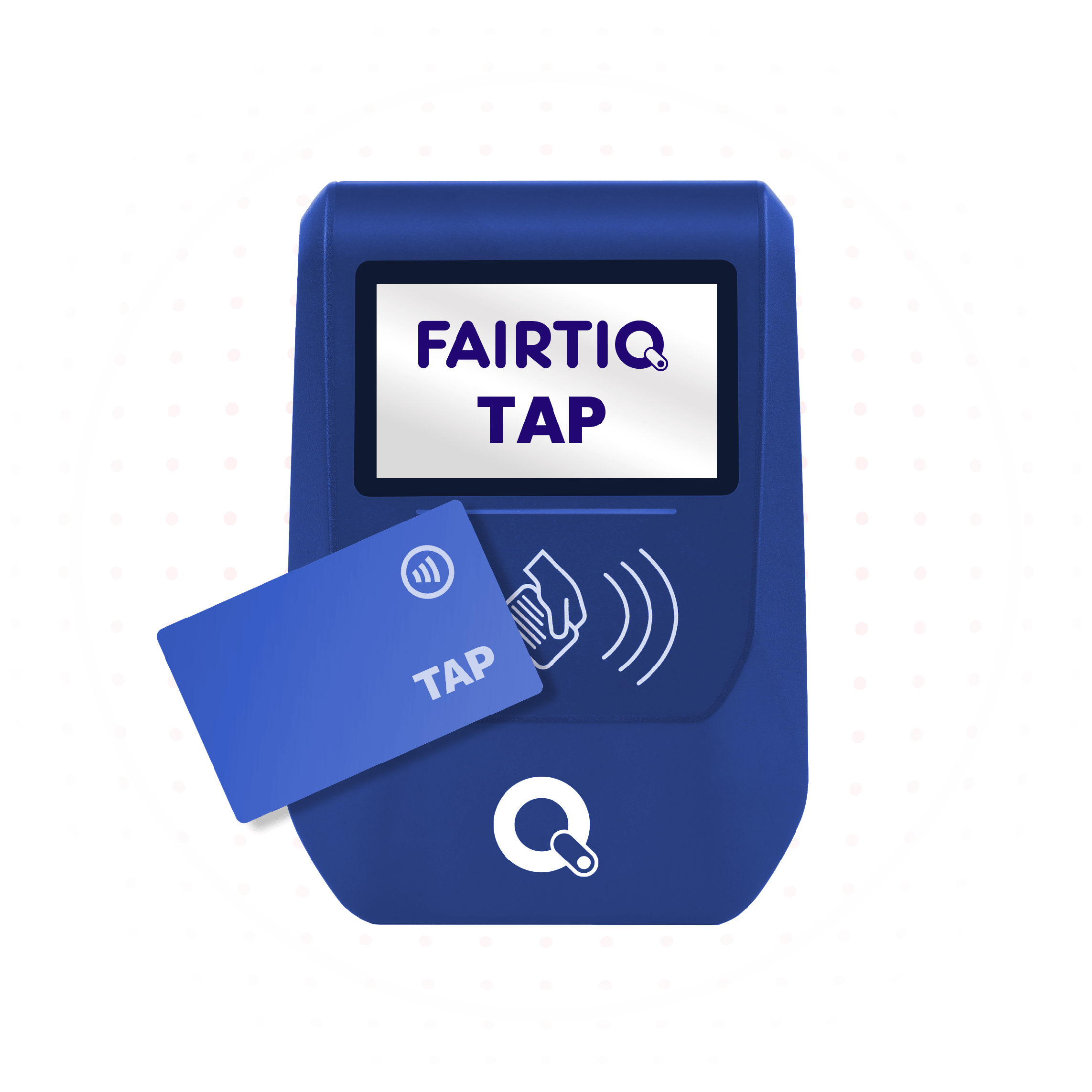
With the launch of Basiskort in February 2026, Denmark became the first country in the world to operate a nationwide ticketing ecosystem, powered by FAIRTIQ's Mobile Pay-As-You-Go and Tap technologies on a single backend.
The real innovation lies behind the scenes. For passengers, Denmark offers two complementary ways to access the same nationwide Pay-As-You-Go system. For Rejsekort and the participating transport operators, however, there is only one ticketing ecosystem.
At its core, Denmark’s new system follows an Account-Based Ticketing (ABT) approach. Powered by FAIRTIQ’s backend, a single platform manages customer accounts, journeys and fares across both channels, including:
For travellers, this creates a consistent experience regardless of which channel they use. Whether using the Rejsekort app or Basiskort, customers access the same account and the same digital services through the FAIRTIQ Web Portal, where they can order and manage Basiskort, top up their account, manage companions and linked accounts, view journey history, download receipts and invoices, and update their account settings.
For Rejsekort and the public transport operators, this account-based architecture yields even greater benefits. Rather than operating separate systems for mobile and card-based ticketing, both channels evolve together on a single platform. In many cases, new fare rules, products and features only need to be developed once before becoming available across the entire ecosystem, significantly reducing operational complexity while accelerating innovation.
Smartphone-based PAYG (Rejsekort App)
Primary travel channel
Designed for +90% of travellers
Rich digital experience
No additional investments in hardware required
Drives digital adoption and operational efficiency
Card-based PAYG (Basiskort)
Complementary channel
Designed for ca. 10% travellers who need or prefer a non-mobile solution
Simple physical experience
Lower hardware investment required compared to traditional card-based systems
Ensures accessibility, inclusion and traveller choice
Both channels powered by the same FAIRTIQ backend
Seamless customer experience across all channels
Reduced operational complexity
Faster innovation cycles
The biggest advantage of Denmark's strategy is not simply that it offers both app and Tap. It is that the app remains the default channel, fundamentally changing the infrastructure requirements of Automated Fare Collection.
With the large majority of journeys taking place through the Rejsekort app, physical infrastructure does not need to be designed around every passenger and every journey. Instead, the Basiskort infrastructure can focus on ensuring that travellers who cannot or prefer not to use the app still have an accessible way to travel.
This mobile-first approach creates opportunities to reduce the overall dependency on physical ticketing infrastructure, including validators as well as infrastructure related to purchasing and loading physical cards. Over time, a smaller hardware footprint can also mean fewer components to install, maintain, replace and manage throughout their lifecycle.
The same principle applies behind the scenes. Both the Rejsekort app and Basiskort are supported by the same FAIRTIQ technology platform, allowing key ticketing capabilities to be shared across channels rather than building and operating entirely separate systems.
The result is a simpler and more efficient approach to nationwide fare collection: digital where possible, physical where needed, and designed as one integrated ecosystem.
Denmark's journey demonstrates that cost-reduction and inclusion are not opposing goals. By making mobile the primary channel while providing a complementary card-solution for the remaining traveller groups, RKRP has created a unified pay-as-you-go ecosystem that gives travellers the freedom to choose while enabling the operator to reduce infrastructure costs, simplify operations and continuously innovate on a single technology platform. The system is simultaneously:
A seamless mobile experience for the vast majority of passengers
Guaranteed access to public transport for those who cannot or prefer not to use a smartphone
One nationwide Pay-As-You-Go system with consistent fares across both channels
A shared customer account and digital services, regardless of whether they travel with the app or Basiskort
Continued support for anonymous travel where required
A future-ready platform that continuously evolves through digital innovation
A direct customer interface for the vast majority of travellers
Few anonymous journeys
Great precision in journey recording quality
Accessibility and inclusion without sacrificing operational efficiency
Possibility to easily expand the system at low cost into DRT and other mobility services
Faster product development and simpler operations through a single technology platform
Lower infrastructure, maintenance and lifecycle costs
Significant projected savings
Discover how a mobile-first ticketing platform powered by Mobile Pay-As-You-Go can help you reduce costs, support every passenger and simplify fare collection with minimal hardware.