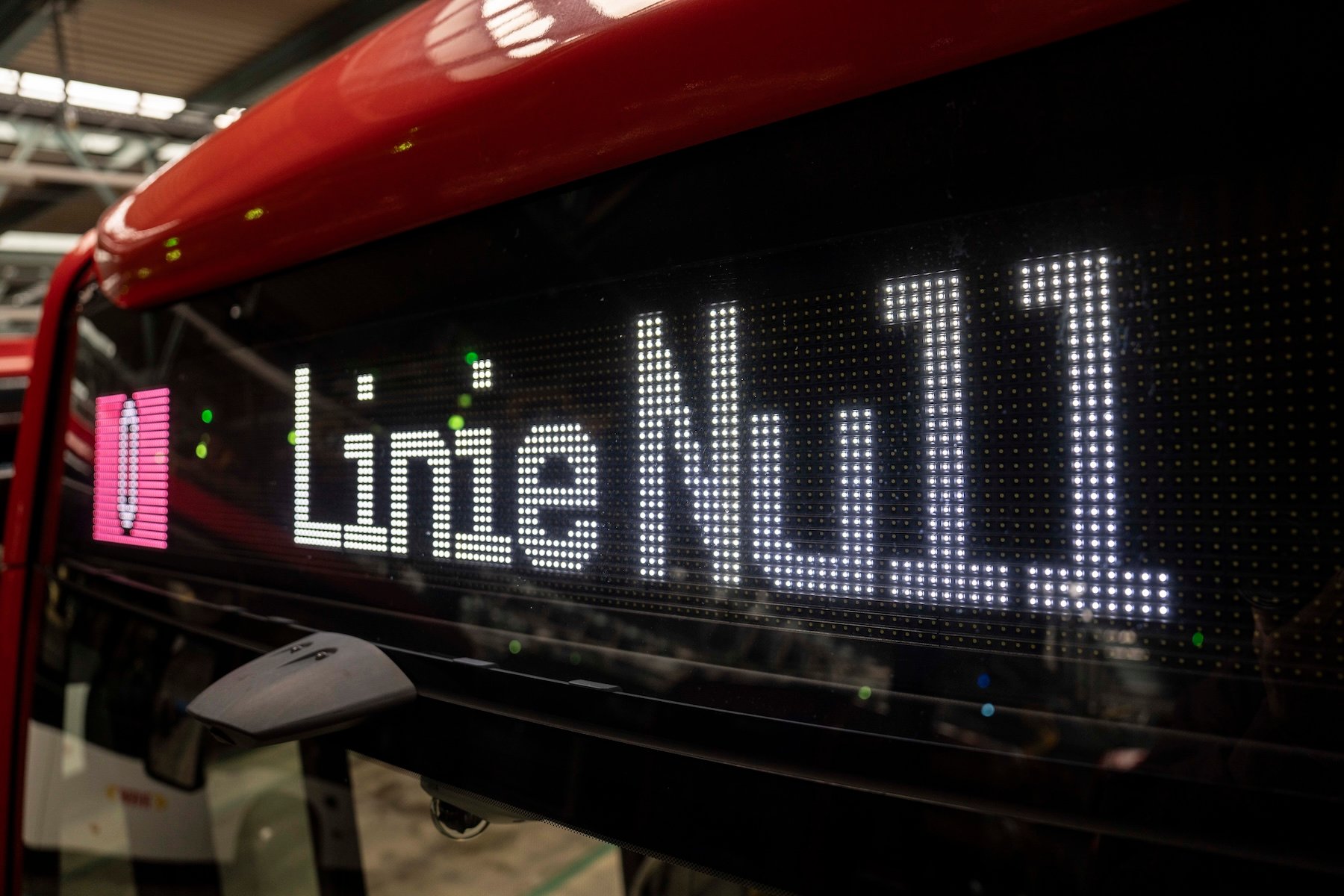
Photo: © Bodo Rüedi, 2026
In a world shaped by algorithms, AI-generated content and interchangeable marketing campaigns, attention has become one of the most valuable currencies. At the same time, people are longing once again for genuine experiences, spontaneous encounters and stories that cannot be planned down to the last detail.
That is exactly where ‘Line Zero’, launched by Regional Transport Services Baden-Wettingen (RVBW), comes in. A bus with no timetable and no fixed destination. And yet – or perhaps because of that – everyone suddenly seems to be talking about it.
Together with conceptual artists Frank and Patrik Riklin, RVBW has launched a project that goes far beyond a traditional public transport campaign. For three weeks, ‘Line Zero’ is travelling through Baden and Wettingen in Switzerland – not to move people from A to B as efficiently as possible, but to create space for chance encounters, unexpected conversations and new perspectives. It is a bold experiment at the intersection of mobility, art and society.
Provocative? Perhaps. But that is precisely where the idea draws its strength.
While many transport operators are fighting for visibility, ‘Line Zero’ shows what can happen when public transport becomes more than infrastructure and starts functioning as a brand people engage with.
Photo: © Bodo Rüedi, 2026
For RVBW, the project is far more than a creative PR moment. ‘Line Zero’ deliberately sends a message: mobility can be emotional, and unconventional ideas can reignite curiosity about public transport.
In this interview, Marija Di Cerbo, Lead Marketing at RVBW, explains the thinking behind the idea, the reactions that surprised her most and why transport operators sometimes create the greatest impact when they stop trying to control every outcome.
FAIRTIQ: What surprised you most after launching ‘Line Zero’ – especially in terms of passenger behaviour?
Marija Di Cerbo: What surprised us most was how quickly people embraced something completely unfamiliar. Many passengers boarded with a smile at first, and suddenly conversations started between strangers, spontaneous moments unfolded and an atmosphere emerged that you rarely experience in everyday life. You could really sense that people are longing for exactly these kinds of authentic, unplanned experiences.
FAIRTIQ: Was there a moment during the ‘Line Zero’ project when you realised: ‘This is becoming more than a traditional public transport campaign’?
Marija: Absolutely. At the latest when international media started reporting on the project and we realised that ‘Line Zero’ was sparking discussions around the world. That was the moment it became clear: this is no longer just about a bus. It raises much bigger questions. How do we want to move through our cities? How much spontaneity do we still allow in our lives? And why does a project that is intentionally not perfectly planned resonate so deeply with people?
‘Line Zero’ is making waves far beyond Switzerland. Here, for example, in a TV segment by the US broadcaster CBS News in Texas.
FAIRTIQ: Looking back now, if you had to make the decision again – would you implement ‘Line Zero’ in exactly the same way, or would you change something?
Marija: I believe we would still have the courage to do something that is not entirely controllable. That was probably one of the project’s greatest strengths. Of course, from an organisational perspective, you always learn along the way. But we would absolutely hold on to the openness, the courage and the trust in the idea itself.
FAIRTIQ: That openness sounds inspiring, but probably challenging at times too. Can you share an example of how you managed those organisational challenges?
Marija: One thing that really impressed us was how quickly and pragmatically we were able to react internally to spontaneous situations. On some days, demand was far higher than expected and we had to deploy additional buses at very short notice. It worked remarkably fast and smoothly. You could feel that many colleagues genuinely enjoyed being part of this unusual experiment and were happy to think flexibly alongside us. That mindset made a huge difference.
FAIRTIQ: What advice would you give to other transport operators that want to experiment with bold mobility ideas?
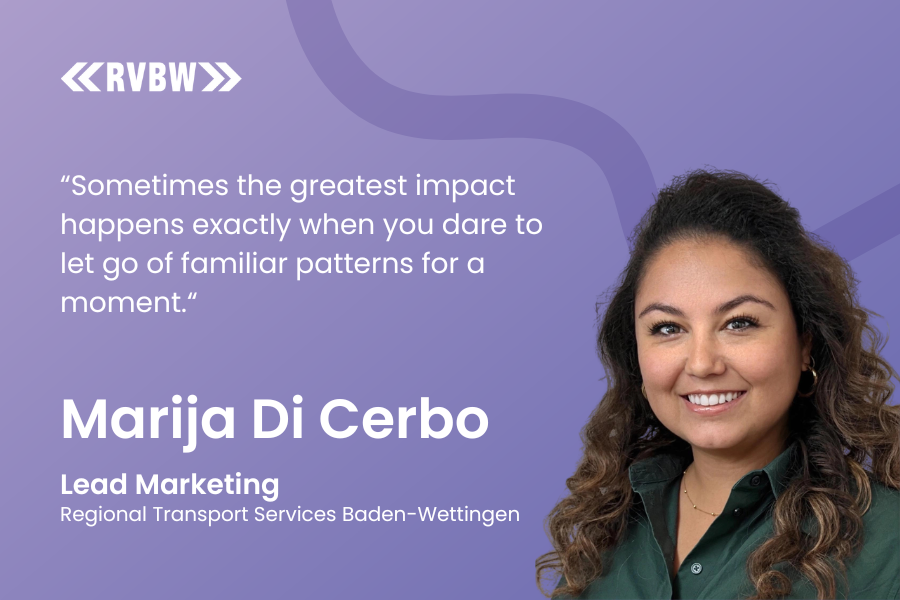
Marija: Not everything has to be perfect from day one. People can tell whether something is genuinely meaningful or simply another marketing campaign. Especially in public transport, we should allow more room again for emotion, human encounters and wider societal conversations. Sometimes the greatest impact happens exactly when you dare to let go of familiar patterns for a moment.
‘Line Zero’ is a powerful reminder that marketing in public transport does not always have to follow the same playbook. Sometimes the greatest impact comes precisely from leaving room for surprise.
Of course, not every transport operator is going to launch a bus without a destination tomorrow. But perhaps now is exactly the right moment to question established communication patterns and reconnect people emotionally with mobility.
And yes: Exceptionally, FAIRTIQ cannot be used on ‘Line Zero’ – for a very good reason. All journeys are free of charge.
Would you like to discover more bold ideas, emerging trends and fresh perspectives from the world of mobility? Subscribe to our Business Digest and stay informed about the latest developments in public transport.

Don’t miss out!


 Get the app

 Discover our customer stories
-2-1.jpg)